Health and Safety Policy for Cleaners Roehampton
 This health and safety policy sets out the standards and responsibilities that support safe, consistent, and professional cleaning services in homes, offices, and shared spaces. It is designed to protect cleaners, clients, visitors, and anyone else who may be affected by cleaning activities. Our approach is based on prevention, awareness, and careful working practices, with cleaner safety treated as a core part of service quality.
Every cleaning task carries some level of risk, from slips and trips to exposure to chemicals or moving equipment. For that reason, safe working is not treated as an optional extra. All cleaning operatives are expected to follow practical control measures, use suitable equipment, and remain alert to changing conditions in the work area. The goal of this policy is to reduce avoidable incidents while maintaining a high standard of cleanliness.
 This policy applies to all staff, supervisors, and anyone carrying out cleaning duties on behalf of the service. It covers routine cleaning, deep cleaning, sanitising tasks, waste handling, and the movement of materials and tools. While procedures may vary depending on the site, the same core principles remain in place: assess the risk, work carefully, and report concerns promptly.
Managers and supervisors have a duty to provide suitable instruction, make sure equipment is in good condition, and ensure that work is planned in a way that supports safe practice. Cleaners must also take personal responsibility for following instructions, wearing any required protective items, and refusing to continue if a task becomes unsafe. This shared responsibility helps create a strong safety culture across all cleaning operations.
The main hazards associated with cleaning services include wet floors, trailing cords, heavy lifting, contact with cleaning substances, sharps or contaminated materials, and fatigue from repetitive tasks. To reduce these risks, work areas should be kept tidy, warnings should be used where floors are wet, and heavy or awkward items should be moved using correct techniques or suitable assistance. It is important to slow down rather than rush, especially in busy or unfamiliar environments.
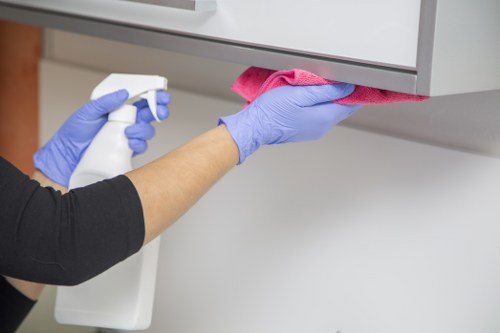 Cleaning chemicals must be selected, stored, and used responsibly. Products should be clearly labelled and used in line with instructions, with attention given to dilution, ventilation, and compatibility with surfaces. Never mix substances unless the product guidance specifically allows it. Protective gloves, aprons, or eye protection should be used where required. If irritation, dizziness, or any unusual reaction occurs, the task should stop immediately and the situation should be reported.
Equipment safety is another essential part of this policy. Mops, vacuums, trolleys, extension leads, and any powered items must be checked before use and taken out of service if damaged. Faulty equipment should not be improvised or used in a makeshift way. Proper storage, cleaning, and maintenance help prevent avoidable breakdowns and reduce the risk of injury.
Good manual handling practice must always be followed. This means assessing weight, shape, and distance before lifting, avoiding twisting movements, and asking for help when a load is too heavy or awkward. Where possible, use equipment to reduce strain rather than carrying items by hand. Repetitive cleaning tasks should also be varied where feasible to limit discomfort and overuse injuries. Safe posture and steady pacing are important for long-term wellbeing.
Working environments can change quickly, so cleaners should remain observant at all times. Spills, broken items, blocked exits, exposed wires, or unsafe behaviour by others should be reported and addressed without delay. If the area cannot be made safe, the task should be paused. Risk awareness is a key part of every job, and no task should be completed at the expense of personal safety.
 In the event of an accident, near miss, or health concern, the incident must be reported as soon as possible. This includes slips, cuts, chemical splashes, musculoskeletal pain, and any situation that could have caused harm. Prompt reporting supports learning, improves control measures, and helps prevent recurrence. First aid should be sought immediately when needed, and serious incidents must be escalated without delay.
Training and supervision are central to the success of this policy. Workers should receive clear information on safe methods, product use, emergency steps, and the correct use of personal protective equipment. Training should be refreshed when procedures change or when new risks are introduced. A well-informed cleaning team is more likely to work confidently, efficiently, and safely.
Health matters are treated with equal importance to physical hazards. Cleaning work can involve repeated movement, standing for long periods, exposure to dust, and contact with allergens or irritants. Staff are encouraged to speak up early if they experience discomfort, breathing issues, skin problems, or fatigue. Early action supports recovery and helps prevent minor issues becoming serious. This is part of a wider commitment to safe and healthy cleaning practices.
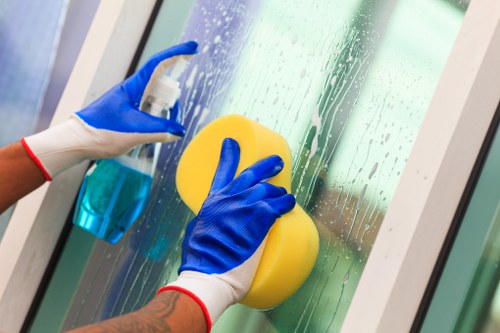 The use of personal protective equipment should always match the task and the level of risk. Gloves, masks, aprons, and other items should be worn correctly, replaced when worn out, and stored properly between uses. PPE is only one part of risk control, however; it should support, not replace, sensible planning and careful working methods.
We also recognise the importance of respectful communication and cooperation. Cleaners should be informed of any special conditions, such as access restrictions, fragile surfaces, or areas requiring extra caution. Clear communication helps avoid confusion and keeps work flowing smoothly. Where a task cannot be completed safely, the correct response is to stop, assess, and seek further instruction.
By following this policy, cleaners and supervisors contribute to a dependable service that values wellbeing as much as results. Health and safety is an ongoing commitment, not a one-time requirement. Regular review, sensible planning, and consistent attention to detail help ensure that cleaning work remains safe, effective, and professional in every setting.